Gold and silver have attracted serious attention from investors, especially as concerns about inflation, economic uncertainty, and global instability have grown. These precious metals have been stores of value for thousands of years, but their role in modern portfolios raises important questions about whether they truly belong in your investment strategy.
Gold and silver can be good investments for diversification and protecting against economic uncertainty, but they work best as part of a balanced portfolio rather than as your main investment. Both metals tend to move differently from stocks and bonds, which means they might hold or gain value when other investments decline.
Gold has risen over 100% since early 2024, while silver has jumped 190% in the same period, though past results don’t guarantee future gains. Understanding how these metals differ, the various ways you can invest in them, and the specific risks they carry will help you decide if they fit your financial goals.
This guide walks through the core roles precious metals play, compares gold versus silver as investment options, and shows you how to build a strategy that matches your risk tolerance and timeline.
Key Roles of Gold and Silver in a Portfolio

Gold and silver serve distinct but complementary functions in investment portfolios. They act as stability anchors during market volatility, protect purchasing power against inflation, reduce overall portfolio risk through diversification, and provide safety during periods of economic or geopolitical stress.
Stability and Store of Value
Gold has maintained purchasing power across centuries, making it one of the most reliable stores of value available to investors. Unlike paper currencies that can be printed in unlimited quantities, gold’s supply grows slowly and predictably.
This scarcity gives it intrinsic worth that persists regardless of government policies or economic conditions. Central banks worldwide hold gold as a reserve asset precisely because it carries no counterparty risk.
You own the metal outright, with no dependence on any institution’s promise to pay. Recent central bank demand has reached near-record levels, with many countries actively accumulating gold to diversify away from dollar-heavy reserves.
Silver functions similarly as a store of value but with more volatility. Its smaller market size means prices can swing more dramatically.
While silver preserves wealth over long periods, its dual role as both a monetary and industrial metal creates different price dynamics than gold’s more straightforward reserve asset status.
Hedge Against Inflation
Both metals historically perform well when inflation erodes the purchasing power of paper currencies. When the cost of goods and services rises, gold and silver prices tend to increase as investors seek assets that maintain real value.
Gold serves as the primary inflation hedge within precious metals. Its price typically moves inversely to the real value of the dollar.
When inflation accelerates faster than interest rates compensate, gold becomes more attractive relative to cash or bonds that lose purchasing power. Silver provides inflation protection with added industrial demand drivers.
As manufacturing costs rise with inflation, silver’s role in electronics, solar panels, and other technologies means its price often reflects both monetary and production economics. This dual nature can amplify gains during inflationary periods but also adds complexity to how silver responds to different economic conditions.
Diversification Benefits
Precious metals allocation typically ranges from 5% to 15% of a total portfolio, depending on your risk tolerance and investment goals. Gold and silver move independently from stocks and bonds most of the time, which reduces overall portfolio volatility.
When equities decline, metals often hold value or rise, providing balance during market stress. The correlation between precious metals and traditional assets remains low across most market cycles.
This mathematical relationship means adding gold and silver can improve risk-adjusted returns without requiring you to sacrifice long-term performance. You’re essentially smoothing out the ride while maintaining exposure to growth.
A common allocation approach weights gold more heavily for stability, with silver adding a growth component. Conservative investors might hold 70-80% gold and 20-30% silver within their metals position.
More aggressive strategies increase silver’s weight to capture its higher percentage moves during favorable conditions.
Safe Haven During Uncertainty
Gold demand surges during geopolitical tensions, financial crises, and periods of systemic instability. Investors worldwide recognize it as a neutral asset that transcends national boundaries and political systems.
When confidence in governments or financial institutions wavers, gold’s lack of counterparty risk becomes especially valuable. The metal’s deep liquidity ensures you can convert holdings to cash quickly in nearly any market environment.
Gold trades 24 hours a day across global exchanges, maintaining bid-ask spreads that allow efficient entry and exit even during volatile periods. Silver benefits from safe haven flows but to a lesser degree than gold.
Its industrial exposure means economic slowdowns can offset monetary demand, creating mixed signals during certain types of crises. However, when both monetary uncertainty and industrial activity align positively, silver’s smaller market size can produce outsized gains that gold doesn’t match.
Differences Between Gold and Silver as Investments
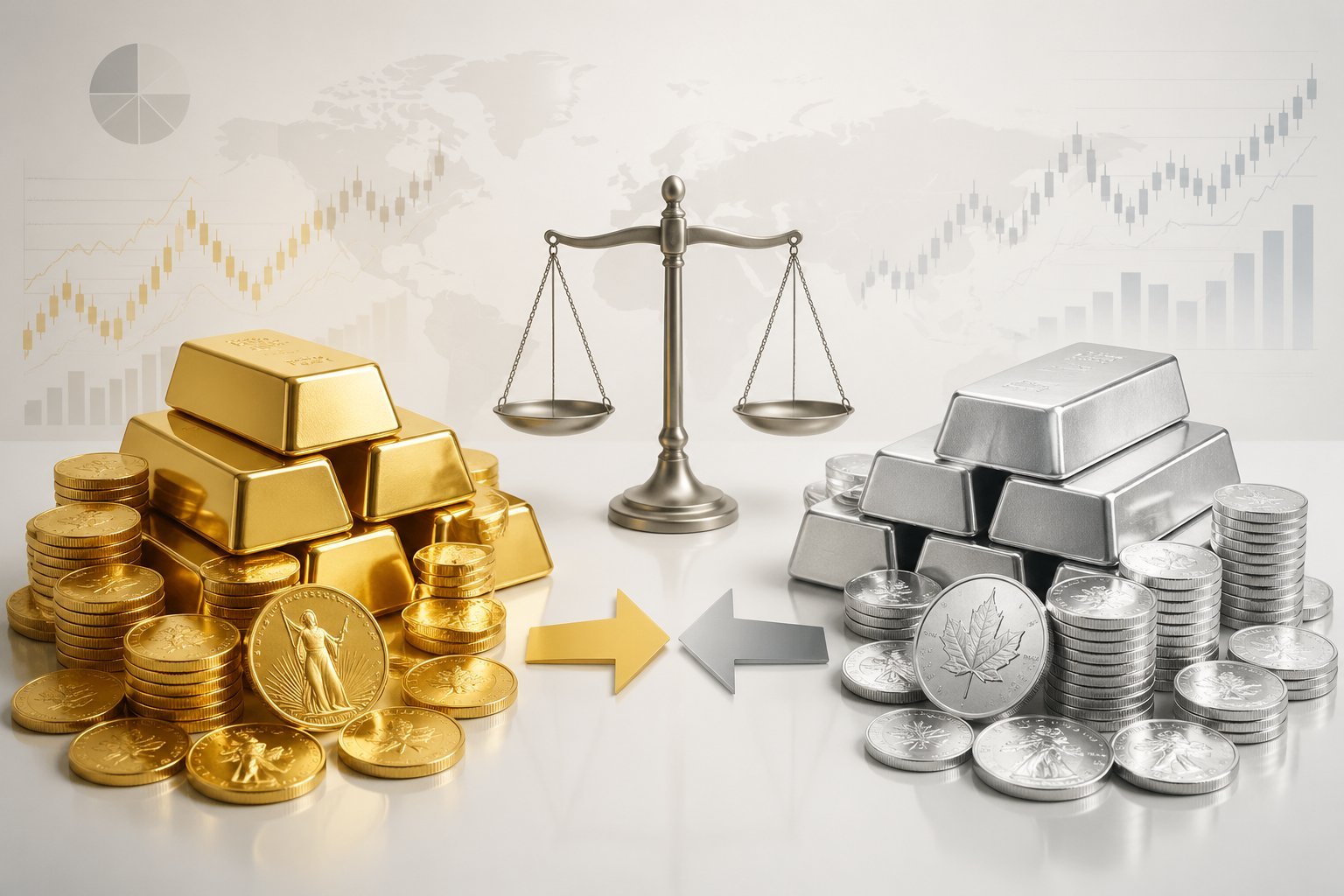
Gold and silver serve different roles in investment portfolios due to their distinct market behaviors and uses. Gold primarily functions as a monetary asset, while silver operates as both a precious metal and an industrial commodity, creating unique price patterns and risk profiles for each.
Market Dynamics and Volatility
Gold typically delivers more stable price movements compared to silver. Its price tends to move in measured increments, even during periods of market stress.
This stability makes gold attractive to conservative investors and explains why central banks hold it as a reserve asset. Silver experiences significantly higher volatility than gold.
The price can surge rapidly when market sentiment shifts positive, but it can also drop just as quickly during downturns. This volatility creates opportunities for higher gains but also presents greater risk of losses.
The gold to silver ratio tracks how many ounces of silver equal one ounce of gold. This ratio fluctuates based on market conditions and helps investors identify potential opportunities.
When the ratio is high, silver may be undervalued relative to gold. When it’s low, gold might offer better value.
Industrial Versus Monetary Demand
Silver demand splits between investment and industrial uses. About half of all silver demand comes from industrial applications like electronics manufacturing, solar panels, and medical devices.
This industrial demand means silver prices often rise during economic expansions when manufacturing activity increases. Gold demand primarily comes from investment and jewelry markets.
Industrial uses account for a small portion of total gold demand. When investors lose confidence in currencies or stock markets, gold benefits as a perceived safe haven.
Market demand for gold remains more consistent because it doesn’t depend heavily on economic growth. Silver demand, however, fluctuates more dramatically based on industrial production levels.
A recession can hurt silver demand even when gold is climbing due to safe-haven buying.
Gold vs. Silver Performance
Gold and silver respond differently to economic conditions. Gold tends to perform well when real interest rates fall or during periods of currency weakness and geopolitical uncertainty.
Its role as a defensive asset means it often gains value when other investments struggle. Silver can benefit from the same conditions that help gold, but its performance also depends on industrial activity.
During strong economic growth periods, silver may outperform gold due to increased manufacturing demand. During economic contractions, silver often underperforms gold despite both being precious metals.
The spot price movements of these metals can diverge significantly. Silver may rise faster than gold during bull markets for precious metals, but it typically falls harder during bear markets.
This asymmetric behavior reflects silver’s dual nature as both an investment and industrial commodity.
Affordability and Accessibility
Gold’s high per-ounce price creates a higher entry barrier for investors. A single ounce of gold requires a substantial upfront investment.
Even fractional gold products like smaller bars or coins represent meaningful financial commitments. Silver’s lower spot price makes it more accessible to new investors.
You can start building a position with smaller amounts of capital and accumulate ounces gradually over time. This affordability allows you to diversify across different silver products without committing large sums at once.
Liquidity differs between the two metals as well. Gold markets generally offer higher liquidity due to larger trading volumes and more market participants.
Silver markets are liquid but can experience wider bid-ask spreads, especially for physical products. Both metals remain easy to buy and sell through dealers, exchanges, and financial products.
Ways to Invest in Precious Metals
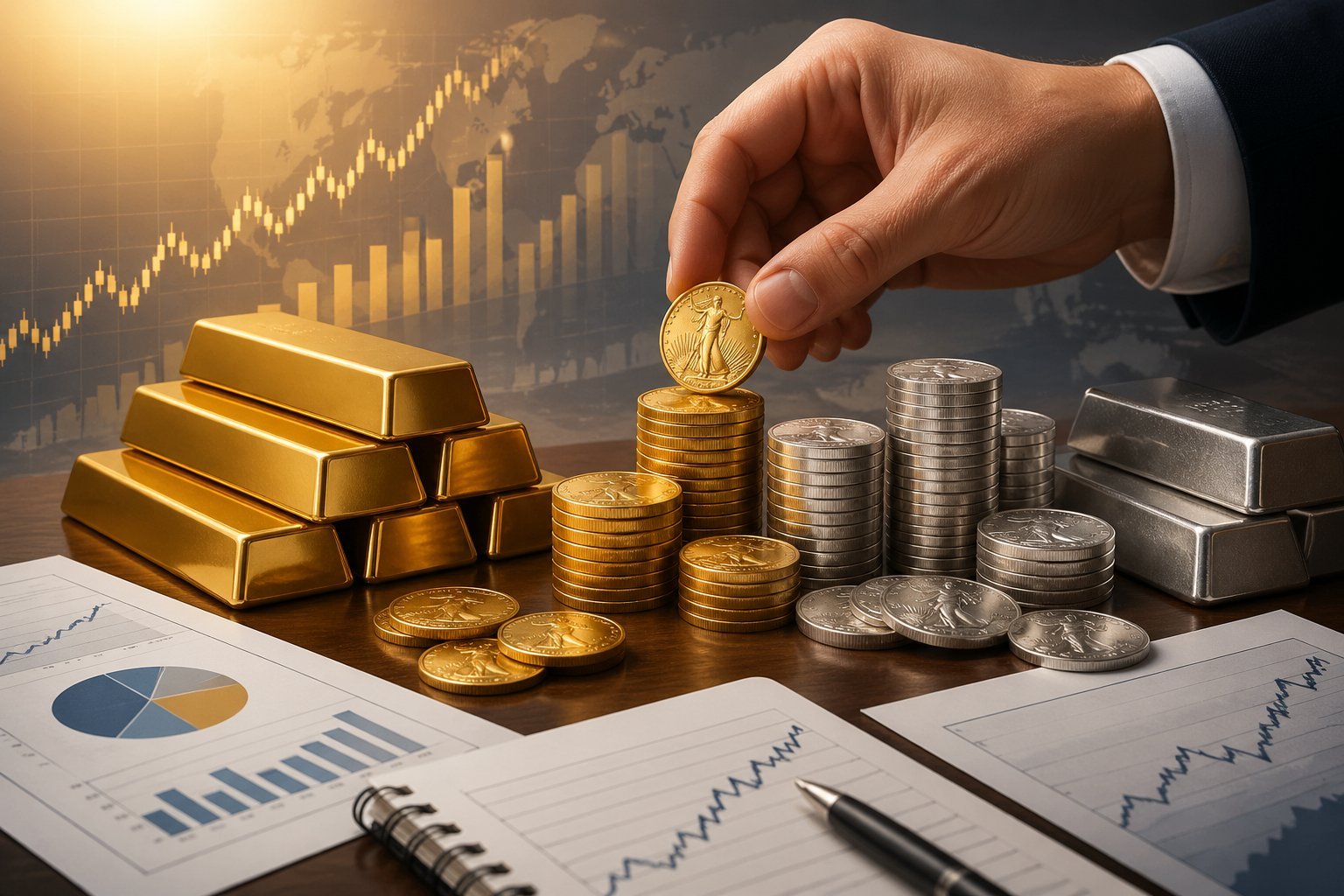
Investors can access gold and silver through multiple routes, from physical ownership to paper assets. Each method carries distinct costs, storage requirements, and risk profiles that affect returns.
Physical Gold and Silver Options
You can buy gold and silver in the form of bars, coins, or jewelry. Gold bars and silver bars offer the purest investment, typically containing 99.5% or higher precious metal content.
These bars range from under one ounce to 400 ounces. Gold coins and silver coins split the difference between investment and collectible.
Popular options include American Gold Eagles, Canadian Maple Leafs, and South African Krugerrands. Coins trade at a premium above their melt value, often 50% or more for initial purchases.
When you invest in physical gold or buy silver in physical form, you need secure storage and insurance. You can store metals at home, rent a safe deposit box, or pay a storage service.
Dealers add markups and fees to the spot price, which cuts into returns. Physical ownership eliminates counterparty risk.
You control the asset directly. However, selling requires verification of authenticity and purity, which adds time and expense to liquidating your position.
Exchange-Traded Funds and Mutual Funds
A gold ETF or silver ETF tracks the price of precious metals without requiring physical storage. These funds hold bullion in secure vaults and issue shares that trade on stock exchanges.
You can buy and sell shares through any standard brokerage account during market hours. Some funds hold only physical metal, while others use futures contracts and options to mirror price movements.
The expense ratio reduces returns, typically ranging from 0.17% to 0.50% annually for popular precious metals funds. Gold and silver mutual funds work similarly but may include mining stocks alongside physical holdings.
These funds provide instant diversification across the precious metals sector. Many brokerages now offer fractional shares, letting you start with small amounts.
ETFs offer high liquidity compared to physical metals. You avoid storage costs, insurance fees, and authentication concerns.
The trade-off is that you own shares of a fund rather than the metal itself.
Futures, Options, and Derivatives
Futures contracts let you control large amounts of gold or silver with less capital through leverage. These standardized agreements trade on exchanges like the Chicago Mercantile Exchange.
One gold futures contract typically represents 100 troy ounces. Options on precious metals provide the right, but not the obligation, to buy or sell at a set price.
Your maximum loss is limited to the premium paid for the option. Futures expose you to potentially unlimited losses if prices move against your position.
These derivatives amplify both gains and losses. A small price movement in gold or silver creates larger percentage changes in your account.
You need a margin-enabled brokerage account to trade futures and must maintain minimum account balances. Trading derivatives requires active management and market knowledge.
If you hold futures contracts to expiration, you could face physical delivery of the metals. Most traders roll contracts forward or close positions before expiration.
Mining Stocks and Allocation Strategies
Gold miners and silver mining companies provide indirect exposure to metal prices. Stock prices reflect both the value of proven deposits and management’s ability to extract metals profitably.
Major mining companies often pay dividends and track metal prices more predictably than junior explorers. Junior mining stocks focus on exploration and development of new deposits.
These carry higher risk but offer greater potential returns if companies discover substantial reserves. Mining stocks fluctuate based on operational costs, not just metal prices.
Sector ETFs like the VanEck Gold Miners ETF offer diversification across multiple mining companies. This approach reduces company-specific risk while maintaining exposure to the precious metals sector.
You can hold mining stocks in standard brokerage accounts or IRAs. A gold IRA lets you hold physical gold bullion in a tax-advantaged retirement account.
You must use an approved custodian and depository. The metals cannot be stored at your home.
Setup involves more steps than regular IRAs but provides the same tax benefits.
Costs, Fees, and Liquidity Considerations

Buying gold and silver involves more than just the spot price you see quoted online. Transaction costs, ongoing storage expenses, and how easily you can sell create real differences in your total investment returns.
Dealer Premiums and Transaction Costs
When you buy physical gold or silver, you pay more than the spot price. This markup is called the dealer premium.
Premiums vary based on the product type and metal. Silver typically carries higher percentage premiums than gold.
You might pay 3-8% over spot for standard gold coins, while silver coins often run 15-30% above spot price. Common premium factors include:
- Product size and type
- Current market demand
- Dealer overhead costs
- Quantity purchased
You’ll also face a spread when selling. Dealers buy back at prices below spot to cover their costs and profit margin.
This spread can range from 2-5% for gold and 5-10% or more for silver depending on market conditions.
Storage and Insurance Logistics
Physical metals need secure storage. Your choices affect both cost and convenience.
Home storage seems free but requires a quality safe and increases homeowner’s insurance costs. Professional vault storage charges annual fees based on value or space used.
Gold’s compact size means lower storage costs per dollar invested compared to silver’s bulk. Storage options and typical costs:
- Home safe: $500-$3,000 one-time cost
- Bank safe deposit box: $50-$300 annually
- Professional vault (allocated): 0.5-1% of value yearly
- Professional vault (segregated): 0.75-1.5% of value yearly
Silver’s weight and volume make storage fees add up faster. $100,000 in silver takes roughly 75 times more space than the same value in gold.
Liquidity Differences by Investment Type
How quickly you can convert metals back to cash depends on what you own. Physical bullion from recognized mints sells easily but requires finding a buyer, verifying authenticity, and arranging secure transfer.
Local coin dealers offer immediate cash but often at lower prices than online dealers. ETFs and mining stocks trade instantly during market hours.
You can sell shares in seconds and receive cash within two business days. Physical metals take days or weeks to sell at fair prices.
Liquidity comparison:
| Investment Type | Time to Cash | Typical Costs |
|---|---|---|
| Physical bullion | 1-7 days | 2-10% spread |
| Gold/Silver ETFs | 2 days | 0.25-0.50% fee |
| Mining stocks | 2 days | Trading commission |
Larger quantities of physical metals can take longer to sell without accepting discounted prices. Breaking up large holdings into smaller, more liquid units helps but increases transaction costs.
Risks and Drawbacks Associated With Precious Metals
Precious metals carry significant risks that can affect your returns and portfolio performance. Price swings can be dramatic, and the costs of ownership extend beyond the purchase price.
Short-Term Volatility and Opportunity Cost
Gold and silver prices can swing wildly over short periods. While gold rose 65% in 2025, it can also drop just as quickly when market conditions change.
Silver is even more volatile, making it harder to predict your investment’s value at any given time. When you invest in precious metals, you give up potential gains from other assets.
Stocks and bonds often generate income through dividends and interest payments, but gold and silver produce nothing while you hold them. A dollar invested in precious metals is a dollar not working for you in the stock market or other income-generating investments.
The store of value concept doesn’t protect you from short-term losses. If you need to sell during a price dip, you could lose money.
Mining stocks amplify this risk—they typically move at twice the rate of gold price changes, which means bigger losses when prices fall.
Tax Implications and Regulatory Factors
The IRS classifies gold and silver as collectibles, which means you pay higher capital gains taxes than you would on stocks. Long-term gains on precious metals face a maximum tax rate of 28%, compared to 20% for most other investments.
Storage and insurance costs add to your expenses. Physical gold and silver need secure storage, whether in a safe deposit box or a private vault.
ETFs that hold precious metals charge management and storage fees that reduce your returns over time. You also face counterparty risk with certain investment vehicles.
Mining companies operate in high-risk countries where political instability or regulatory changes can hurt your investment value.
Building an Effective Precious Metals Strategy

Most financial experts suggest keeping precious metals allocation between 1-10% of your total portfolio, depending on your financial goals and risk tolerance. Working with knowledgeable advisors and understanding market conditions helps you make smarter decisions about when and how much to invest.
Portfolio Allocation Recommendations
A balanced approach to precious metals starts with appropriate position sizing. Financial advisors typically recommend allocating 5-10% of your investment portfolio to gold and silver for beginners.
Conservative investors might stay closer to 1-3%, while those seeking more protection against economic uncertainty could go up to 10%. Allocation Options by Investor Type:
- Conservative investors: 1-3% in physical gold or gold ETFs
- Moderate investors: 5-7% split between gold and silver
- Aggressive investors: 8-10% including mining stocks and royalty companies
You should consider your existing exposure before adding precious metals. If you own stocks in the S&P 500, you already have about 6% exposure to materials and energy sectors.
This matters when calculating your total precious metals allocation. The gold-to-silver ratio also affects how you split your allocation.
Some investors prefer 70% gold and 30% silver to balance stability with growth potential. Others adjust based on current prices and market conditions.
Role of Financial Advisors and Due Diligence
A qualified financial advisor helps you determine the right precious metals allocation for your specific situation. They evaluate your risk tolerance, investment timeline, and overall financial goals before recommending a strategy.
Look for advisors with experience in commodity investing and precious metals markets. They should explain the differences between physical bullion, ETFs, mining stocks, and royalty companies.
Ask about their fee structure and how they get compensated for precious metals recommendations. Your own research remains important even with professional guidance.
Study the characteristics of each investment vehicle before buying gold and silver. Physical metals require storage considerations.
Mining stocks carry operational risks. ETFs charge management fees that reduce returns over time.
Check the credentials and track record of any precious metals dealer or fund manager. Verify their licensing status and read customer reviews.
Avoid dealers who pressure you to buy or make unrealistic promises about future returns.
Timing Considerations and Market Signals
Market timing with precious metals is difficult because prices can be unpredictable. Long-term trends tend to be more reliable than short-term price movements.
Key market signals to watch:
- Real interest rates – Lower rates typically support higher gold prices
- Central bank buying – Increased purchases signal strong institutional demand
- Currency movements – A weakening dollar often correlates with rising gold prices
- Geopolitical tensions – Conflicts and trade disputes drive safe-haven demand
Dollar-cost averaging works well for precious metals investing. You invest a fixed amount at regular intervals regardless of price.
This approach reduces the risk of buying at market peaks. Some investors view price pullbacks as buying opportunities.
Gold dropped from above $5,000 per ounce earlier in 2026 but remains up over 100% since early 2024. These corrections can offer better entry points than buying during rapid price increases.
Avoid making investment decisions based solely on recent price gains. The strongest case for investing in silver and gold focuses on long-term diversification rather than short-term speculation.
Platinum, Palladium, and Other Precious Metals
Beyond gold and silver, you have other precious metal options for your portfolio. Platinum and palladium are the most common alternatives, though they work differently than traditional precious metals.
Key Differences from Gold and Silver
Platinum and palladium serve primarily as industrial metals rather than financial assets. Most of their demand comes from manufacturing, especially in the automotive industry for catalytic converters.
This makes them more sensitive to economic conditions and industrial production levels. Investment Characteristics
| Metal | Primary Use | Price Volatility | Investment Role |
|---|---|---|---|
| Platinum | Industrial (60-70%) | High | Supporting/Speculative |
| Palladium | Industrial (80-90%) | Very High | Supporting/Speculative |
| Gold | Investment/Jewelry | Moderate | Core holding |
| Silver | Mixed (50/50) | High | Diversification |
Both platinum and palladium experience higher price swings than gold. Supply constraints and changes in industrial demand can cause dramatic price movements.
Palladium has seen particularly extreme volatility due to limited mining sources and strong automotive demand. Portfolio Considerations
These metals can play a supporting role in your investment strategy, but they aren’t substitutes for gold or silver. You face different risks with industrial metals because their value depends heavily on manufacturing activity.
Platinum is rarer than gold, yet it often trades at lower prices. Palladium has commanded premium prices in recent years due to supply issues.
Your investment in these metals should be smaller than your gold holdings due to their speculative nature and industrial dependencies.
Frequently Asked Questions
Precious metals investors often have questions about how gold and silver work in their portfolios, what investment methods make the most sense, and how much to allocate. The answers depend on your budget, risk tolerance, and whether you prefer physical ownership or financial instruments.
What are the main benefits and risks of investing in precious metals compared with stocks and bonds?
Gold and silver serve as a hedge against inflation and market volatility. Unlike stocks and bonds, these metals have low correlation with traditional financial markets, which means they often move independently of your other investments.
The main benefit is that precious metals maintain value during economic uncertainty. They have served as a store of wealth for thousands of years.
You can also hold them as physical assets that you control directly. However, precious metals come with notable risks.
They don’t generate any income or dividends like stocks and bonds do. You won’t earn interest or yield while holding gold or silver.
Liquidity can be an issue with physical metals. You need to verify, ship, and physically sell them to realize gains.
Storage and insurance costs also reduce your returns over time.
How can beginners start investing in gold and silver with a small budget?
Many brokerage accounts no longer require minimum deposits. You can start with very little money, especially if you buy fractional shares of gold and silver ETFs.
ETFs give you exposure to precious metals without the hassle of physical storage. You can buy and sell shares through a regular brokerage account just like stocks.
This approach eliminates the costs of insurance and secure storage. Smaller gold and silver coins offer another entry point for beginners.
Fractional gold coins come in half ounce, quarter ounce, and one-tenth ounce sizes. These cost less than full ounce coins or bars and have lower shipping fees.
Start by opening a basic brokerage account if you choose the ETF route. You’ll need your name, address, Social Security number, and date of birth to get started.
What is the difference between buying physical bullion and investing through gold or silver ETFs?
Physical bullion means you own actual gold or silver bars or coins. You can hold them, store them yourself, or pay a service to store them securely.
Bullion gives you direct ownership of the metal. ETFs hold physical gold or silver on your behalf.
You own shares in a fund rather than the metal itself. The fund’s value tracks the price of gold or silver, minus management fees.
Physical bullion requires you to handle storage, insurance, and security. You also pay markups over the melt value when you buy from dealers.
Selling physical metals means finding a buyer and arranging shipment or meetup. ETFs offer much greater liquidity.
You can buy or sell shares instantly during market hours through your brokerage account. You never worry about storage or verifying authenticity.
The downside of ETFs is that you don’t have physical possession of the metal. You also pay ongoing expense ratios to the fund.
Some ETFs may not track the exact price of physical gold or silver perfectly.
How do gold and silver mining stocks compare to holding the metals directly?
Mining stocks are influenced by metal prices but don’t move in perfect sync with them. These companies get judged on the quality of their deposits and their ability to extract metals profitably.
Major mining companies often pay dividends and can see share price appreciation when metal prices rise. This gives you potential income that physical metals cannot provide.
Junior mining companies focus on exploration and tend to be more volatile. Mining stocks carry risks that physical metals don’t have.
Company management decisions, production costs, and operational problems can hurt stock prices even when gold or silver prices rise. A sector ETF like the VanEck Gold Miners ETF offers diversification across multiple mining companies.
This reduces the risk of picking individual stocks. You get exposure to the mining industry without researching individual companies.
How do you invest in gold and silver through a brokerage platform like Fidelity?
You need to open a brokerage account first. Provide your basic personal information including your name, address, tax identification number, and date of birth.
You’ll answer questions about your income level, investment experience, and net worth. Once your account is open, you can buy gold and silver ETFs just like regular stocks.
Search for funds that track precious metals prices or hold physical bullion. Popular options include funds that hold only gold or silver bullion.
Some platforms also offer access to mining stocks and sector funds. You can build a mix of direct metal exposure through ETFs and mining company stocks if you want.
For futures and options trading, you need to confirm your brokerage enables these features. You’ll need a margin-enabled account with strong charting capabilities.
This approach carries higher risk and isn’t recommended for beginners.
How should gold and silver fit into a diversified portfolio, and what allocation is typically recommended?
Gold and silver work best as part of a broader diversification strategy. They are a separate asset class from stocks and bonds with their own unique risks and opportunities.
Most experts suggest limiting precious metals to a portion of your portfolio rather than making them your main investment. The exact percentage depends on your risk tolerance and financial goals.
Consider precious metals as a hedge rather than a growth investment. They help protect against inflation and market downturns but don’t generate income.
Balance them with assets that provide dividends or interest. Your allocation should reflect whether you’re seeking stability or higher returns.
Gold offers more stability as a proven store of value. Silver can provide higher returns because it serves both as an investment and industrial commodity.